The Reasons To Work With This Cleaning Robots
페이지 정보

본문
How to Get the Most From Cleaning Robots
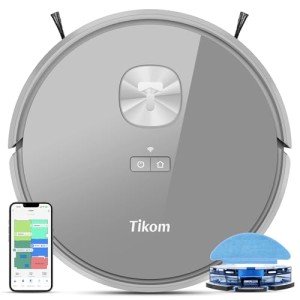 Cleaning robots have revolutionized how companies manage their spaces, offering a wide range of capabilities that can meet the requirements of various industries. To get the most benefit from these machines, make sure you choose models with reliable cellular connectivity and provide remote troubleshooting.
Choose a model that offers the ability to clean zones or spots to remove messes as needed. To prevent tangled hair it is a good idea for you to regularly remove the brushes and any edge or corner brush from your robot vacuum.
Autonomous Cleaning Robots
Robots that are autonomous can clean, sweep and disinfect areas without constant human interaction. They also adapt to different situations and perform tasks that would be too for a human team to handle. These robotic vacuum cleaners cleaners will save you time and money by freeing up staff to focus on more important responsibilities.
While the most familiar type of autonomous cleaning robot is a household vacuum or robotic floor scrubber there is a variety of professional-grade machines that offer far more features than their consumer counterparts. For instance, industrial-grade cleaning robots can clean large warehouse floors, as well as other dirty indoor spaces. They can be programmed to clean up areas that people can't go, by using wall climbing technology and other tools for safer operation in tight spaces.
Most of these autonomous cleaning robots are equipped with a variety of high-tech sensors, such as cameras and mapping software that allow them to map out rooms and avoid obstacles. Some even use AI to learn how they're used and adjust in accordance with the needs of the user, increasing efficiency in the course of time.
These intelligent systems can be incorporated with other smart devices to create a connected, efficient facility. Many of these robots require less energy and use biodegradable cleaning products, making them more environmentally friendly and cost-effective. Additionally, they are designed to work alongside other automated systems, for instance, building automation or material handling systems.
Whether you need one unit or an entire fleet, you should invest in this innovative technology to improve the productivity and performance of your facility's operations. The investment will pay off quickly due to the reduced requirement for manual labor as well as increased safety for operators and a longer life span of surfaces that are cleaned.
This pandemic provides a great opportunity to explore how you can integrate these intelligent cleaning robots into your regular maintenance routine. This is not only an opportunity to assist your team and reduce the risk of infection however, it's also an excellent opportunity to demonstrate to the public that you're making progress in your cleaning routine. You will get the best value for your money when you select the best autonomous robots.
Robotic Vacuums
Sensors aid buy robot vacuum cleaner vacuums in navigating their homes and identify obstacles. Certain models come with infrared sensors, similar to those found on self-driving cars that create an imaginary map of the house; others use camera-based sensors to identify objects and avoid them, resulting in an effective clean with less intervention from the user. The sensors also let you choose an area of the home for cleaning, either using the on-board controls or an app for your smartphone. Some models let you control the robot with voice commands. You can choose to clean one room or have it hug your walls for a perimeter cleaning.
While robotic vacuums are great for picking up dirt embedded in carpets and rugs, they're not able to penetrate deep into pet hair clumps or other messes that require more than just a quick sweep. They also aren't able to remove dust close to baseboards and other edges, which requires a more thorough cleaning than what you'd get with a regular canister or upright vacuum.
When selecting a robot vacuum pick one that has strong suction and brushes designed to collect dirt from surfaces. The most effective models come with features such as object identification technology, customisable settings and pet mode. Read the manual to find out the recommended maintenance intervals. Most models only require you to empty the trash, wipe down the wheels, sensors and charging contacts.
Most of the advanced robot vacuums and mops that we test are compatible with smart home systems that allow you to control them with smartphone apps or digital voice assistants, such as Amazon Alexa and Google Assistant. You can program a cleaning session, or begin one and set a timer to allow it to be completed while you are away. Some robot vacuums can pause cleaning sessions to recharge, and then pick up where they stopped. However, many robot vacs still don't work as well as traditional vacuums or in tight spaces and their compact designs can be a hassle to maneuver around furniture.
Robotic Floor Scrubbers
Unlike vacuum cleaners, which are used for removal of loose debris from carpets and floors, robotic floor scrubbers use water to agitate and dissolve dirt and grime off of hard flooring. They can be powered by themselves, or controlled by a person. The most advanced models can detect and automatically navigate around obstacles, which reduces the time needed to clean. Some models use intelligent water management systems that recycles and reuses clean water for hours of continuous operation.
Using a robotic cleaning machine can help to augment the amount of work in facilities that are not adequately staffed or are afflicted with high turnover rates. Staff can focus on other important tasks when a robot is on the job. In a hospital this may mean that surfaces that are frequently touched, like doors, countertops, and bathrooms are cleaned and sanitized. In a retail shop, it may be helping customers find what they're looking to find and to avoid customer displeasure due to scratches and smudges on windows and glass.
Robotic floor scrubbers can be programmed to operate at specific times and their cleaning route can be customized with various modes to meet the specific needs of cleaning. They can be monitored in real-time and allow managers to monitor their progress via mobile apps or web-based portals. Some companies collect these kinds of data and make them available to end users so that they can pinpoint areas of improvement.
Simple models can be purchased for less than $100. They have only a single reservoir of water and a static pad, similar to the Swiffer, that spritzes and wipes, as well as collects dirt. The more sophisticated models come with two rotating pads that can sweep and scrub the floor. They also have self-emptying docks that allow them to dump dirty water and refill with new cleaning solution. The most advanced mop-vacs for robots can distinguish between different types of flooring and can return to the dock to empty out any unneeded cleaning solution and clean their brushes before refilling with fresh cleaning solution.
All kinds of robots are connected via a cloud-based system that gives detailed reports on their performance, usage, and anomalies. The data can be accessed remotely by facility managers and other employees who have been granted access to the system.
Robotic Floor Mop
A robot mop will allow you to maintain your floors without touching them. These robots will clean your tile and wood floors between deep cleaning sessions, and will keep dust pet hair, dirt dust and other debris at low levels. These robots work on all sealed flooring, including laminate, hardwood and vinyl. The majority of robot sweeper mops can be operated with a timer to clean at specific times, and you can make use of the app to alter cleaning settings, set up a schedule or monitor when the mop requires maintenance such as changing the filter.
Robotic floor mops usually require an additional tank of water for mopping. It can be difficult to fill and empty when the pads become dirty. Choose a model that has a self-emptying dock or one that can be easily emptyable by hand when needed.
Certain models also have the ability to vacuum However, you might need to empty the dust bin after each cleaning session (unless it has a self-emptying base). If your floors are particularly filthy, you may be able to get better results if you let the robot sweep first, and then mop.
Some robot mops allow you to add a cleaning agent into the water tank. This can provide them with an even more effective cleaning. Use only the cleaners recommended by the manufacturer. Unauthorized cleaners could damage your machine or void the warranty.
Some apps allow you to not only start and stop your bot, but also create an outline map and establish virtual barriers or no-go zones. Some will even inform you when the battery is running low and the mop needs to be washed.
You might want to consider a hybrid robot, such as the Ecovacs Roborock Q Revo or the Deebot X2. Both of them can save maps of your floors, and they can track and automatically charge if the batteries are running low during cleaning. They also have a variety of other useful features including a remote stop and start button, as well as an app that lets you to set up an automated schedule for cleaning or observe when your mop requires maintenance.
Cleaning robots have revolutionized how companies manage their spaces, offering a wide range of capabilities that can meet the requirements of various industries. To get the most benefit from these machines, make sure you choose models with reliable cellular connectivity and provide remote troubleshooting.Choose a model that offers the ability to clean zones or spots to remove messes as needed. To prevent tangled hair it is a good idea for you to regularly remove the brushes and any edge or corner brush from your robot vacuum.
Autonomous Cleaning Robots
Robots that are autonomous can clean, sweep and disinfect areas without constant human interaction. They also adapt to different situations and perform tasks that would be too for a human team to handle. These robotic vacuum cleaners cleaners will save you time and money by freeing up staff to focus on more important responsibilities.
While the most familiar type of autonomous cleaning robot is a household vacuum or robotic floor scrubber there is a variety of professional-grade machines that offer far more features than their consumer counterparts. For instance, industrial-grade cleaning robots can clean large warehouse floors, as well as other dirty indoor spaces. They can be programmed to clean up areas that people can't go, by using wall climbing technology and other tools for safer operation in tight spaces.
Most of these autonomous cleaning robots are equipped with a variety of high-tech sensors, such as cameras and mapping software that allow them to map out rooms and avoid obstacles. Some even use AI to learn how they're used and adjust in accordance with the needs of the user, increasing efficiency in the course of time.
These intelligent systems can be incorporated with other smart devices to create a connected, efficient facility. Many of these robots require less energy and use biodegradable cleaning products, making them more environmentally friendly and cost-effective. Additionally, they are designed to work alongside other automated systems, for instance, building automation or material handling systems.
Whether you need one unit or an entire fleet, you should invest in this innovative technology to improve the productivity and performance of your facility's operations. The investment will pay off quickly due to the reduced requirement for manual labor as well as increased safety for operators and a longer life span of surfaces that are cleaned.
This pandemic provides a great opportunity to explore how you can integrate these intelligent cleaning robots into your regular maintenance routine. This is not only an opportunity to assist your team and reduce the risk of infection however, it's also an excellent opportunity to demonstrate to the public that you're making progress in your cleaning routine. You will get the best value for your money when you select the best autonomous robots.
Robotic Vacuums
Sensors aid buy robot vacuum cleaner vacuums in navigating their homes and identify obstacles. Certain models come with infrared sensors, similar to those found on self-driving cars that create an imaginary map of the house; others use camera-based sensors to identify objects and avoid them, resulting in an effective clean with less intervention from the user. The sensors also let you choose an area of the home for cleaning, either using the on-board controls or an app for your smartphone. Some models let you control the robot with voice commands. You can choose to clean one room or have it hug your walls for a perimeter cleaning.
While robotic vacuums are great for picking up dirt embedded in carpets and rugs, they're not able to penetrate deep into pet hair clumps or other messes that require more than just a quick sweep. They also aren't able to remove dust close to baseboards and other edges, which requires a more thorough cleaning than what you'd get with a regular canister or upright vacuum.
When selecting a robot vacuum pick one that has strong suction and brushes designed to collect dirt from surfaces. The most effective models come with features such as object identification technology, customisable settings and pet mode. Read the manual to find out the recommended maintenance intervals. Most models only require you to empty the trash, wipe down the wheels, sensors and charging contacts.
Most of the advanced robot vacuums and mops that we test are compatible with smart home systems that allow you to control them with smartphone apps or digital voice assistants, such as Amazon Alexa and Google Assistant. You can program a cleaning session, or begin one and set a timer to allow it to be completed while you are away. Some robot vacuums can pause cleaning sessions to recharge, and then pick up where they stopped. However, many robot vacs still don't work as well as traditional vacuums or in tight spaces and their compact designs can be a hassle to maneuver around furniture.
Robotic Floor Scrubbers
Unlike vacuum cleaners, which are used for removal of loose debris from carpets and floors, robotic floor scrubbers use water to agitate and dissolve dirt and grime off of hard flooring. They can be powered by themselves, or controlled by a person. The most advanced models can detect and automatically navigate around obstacles, which reduces the time needed to clean. Some models use intelligent water management systems that recycles and reuses clean water for hours of continuous operation.
Using a robotic cleaning machine can help to augment the amount of work in facilities that are not adequately staffed or are afflicted with high turnover rates. Staff can focus on other important tasks when a robot is on the job. In a hospital this may mean that surfaces that are frequently touched, like doors, countertops, and bathrooms are cleaned and sanitized. In a retail shop, it may be helping customers find what they're looking to find and to avoid customer displeasure due to scratches and smudges on windows and glass.
Robotic floor scrubbers can be programmed to operate at specific times and their cleaning route can be customized with various modes to meet the specific needs of cleaning. They can be monitored in real-time and allow managers to monitor their progress via mobile apps or web-based portals. Some companies collect these kinds of data and make them available to end users so that they can pinpoint areas of improvement.
Simple models can be purchased for less than $100. They have only a single reservoir of water and a static pad, similar to the Swiffer, that spritzes and wipes, as well as collects dirt. The more sophisticated models come with two rotating pads that can sweep and scrub the floor. They also have self-emptying docks that allow them to dump dirty water and refill with new cleaning solution. The most advanced mop-vacs for robots can distinguish between different types of flooring and can return to the dock to empty out any unneeded cleaning solution and clean their brushes before refilling with fresh cleaning solution.
All kinds of robots are connected via a cloud-based system that gives detailed reports on their performance, usage, and anomalies. The data can be accessed remotely by facility managers and other employees who have been granted access to the system.
Robotic Floor Mop
A robot mop will allow you to maintain your floors without touching them. These robots will clean your tile and wood floors between deep cleaning sessions, and will keep dust pet hair, dirt dust and other debris at low levels. These robots work on all sealed flooring, including laminate, hardwood and vinyl. The majority of robot sweeper mops can be operated with a timer to clean at specific times, and you can make use of the app to alter cleaning settings, set up a schedule or monitor when the mop requires maintenance such as changing the filter.
Robotic floor mops usually require an additional tank of water for mopping. It can be difficult to fill and empty when the pads become dirty. Choose a model that has a self-emptying dock or one that can be easily emptyable by hand when needed.
Certain models also have the ability to vacuum However, you might need to empty the dust bin after each cleaning session (unless it has a self-emptying base). If your floors are particularly filthy, you may be able to get better results if you let the robot sweep first, and then mop.
Some robot mops allow you to add a cleaning agent into the water tank. This can provide them with an even more effective cleaning. Use only the cleaners recommended by the manufacturer. Unauthorized cleaners could damage your machine or void the warranty.
Some apps allow you to not only start and stop your bot, but also create an outline map and establish virtual barriers or no-go zones. Some will even inform you when the battery is running low and the mop needs to be washed.
You might want to consider a hybrid robot, such as the Ecovacs Roborock Q Revo or the Deebot X2. Both of them can save maps of your floors, and they can track and automatically charge if the batteries are running low during cleaning. They also have a variety of other useful features including a remote stop and start button, as well as an app that lets you to set up an automated schedule for cleaning or observe when your mop requires maintenance.
- 이전글See What Sash Window Repairs Near Me Tricks The Celebs Are Utilizing 25.03.31
- 다음글The Untapped Gold Mine Of Highstakes Poker That Just about Nobody Is aware of About 25.03.31
댓글목록
등록된 댓글이 없습니다.

