10 Misconceptions That Your Boss May Have Concerning Glaucous Macaw
페이지 정보

본문
Glaucous spix's macaw lifespan
The glaucous Macaw can be described as one of the rarest birds in the world. It is Critically Endangered and could be extinct in the wild.
Various Aviculturalists have reported sightings of this bird, but the most recent was in 1992. This alleged sighting was in the southwest of Paraguay near the city Corrientes. The bird was male.
Origin
The Glaucous Macaw is a bird native to South America. It is endangered. This magnificent bird features a unique blue feather pattern and powerful beak that is capable of cracking open tough seeds and nuts. Glaucous macaws are known to form long-term monogamous families and both parents are involved in the raising of the chicks. They feed the chicks regurgitated food for the first couple of weeks after birth, and later they begin to eat solid food as they grow. Parents are also responsible for teaching the young macaws to fly and hunt.
The glaucous macaw is believed to be extinct in the wild, yet stories of this gorgeous bird's existence are still spreading across the globe. It is estimated that the glaucous Macaw was extinct in the 1800s because of the logging industry and cattle grazing in yatay palm (Butia yatay) areas, where the birds primarily gathered their meals. It is currently believed that the glaucous spix macaw for sale has made a comeback in captivity in the wild, where it is kept alongside its larger cousin Lear's macaw.
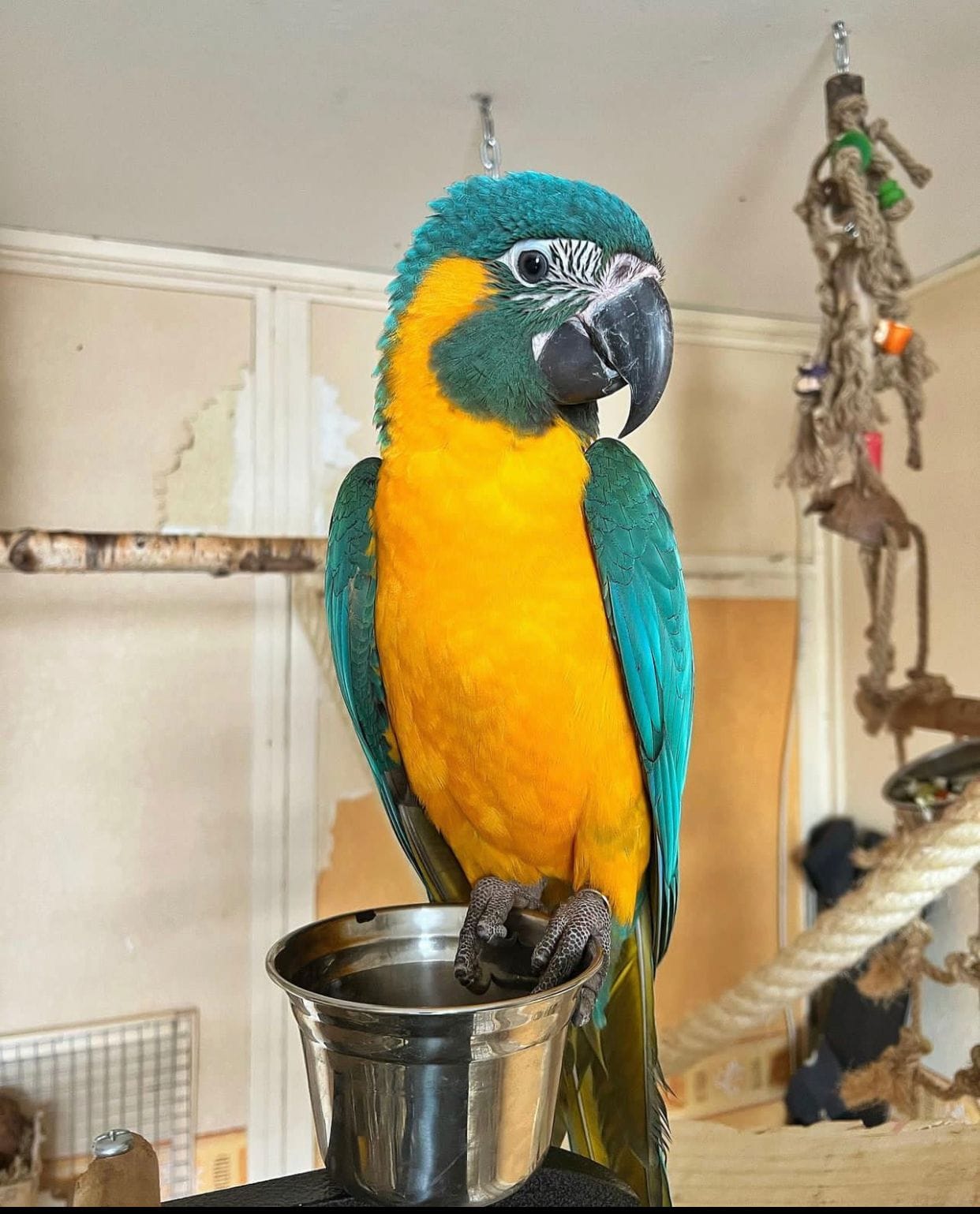 The glaucous Macaw is found in sub-tropical rainforests of South America. They are typically located in areas with a lot of palm trees, parrots To buy and are known to be highly adaptable to a variety of forested habitats. These beautiful birds are territorial and will defend the nesting and feeding area from intruders.
In the past, there have been numerous reports about the glaucous hyacinth macaw cost however they are generally regarded as unreliable. The most recent claim of a wild event is a friend of Ridgely's that claimed to have observed four Glaucous macaws in Califomia. This claim is unacceptable until it is supported with evidence. Many experts have concluded that the bird is likely extinct because there are no records in the last century. However, they have always been willing to accept a small chance of its survival. If it does survive, it will be extremely uncommon to see large numbers.
Habitat
The Glaucous Macaw is a magnificent bird, renowned for its large size and turquoise-blue coloring. The long tail and wings highlight its graceful and agile moves. It is also a symbol of loyalty and love. Its beak, which is predominantly black, is distinctive in its shape that allows it to crack seeds and nuts. They are a significant part of its diet.
IUCN has classified the Glaucous Macaw as Critically Endangered. It states that there is only a small population of the bird and it is at risk of extinction. The species was previously relatively widespread, but it is found only in northern Argentina and southern Paraguay, north-eastern Uruguay and Brazil from Parana state southwards where it is nestled in cliffs on major rivers.
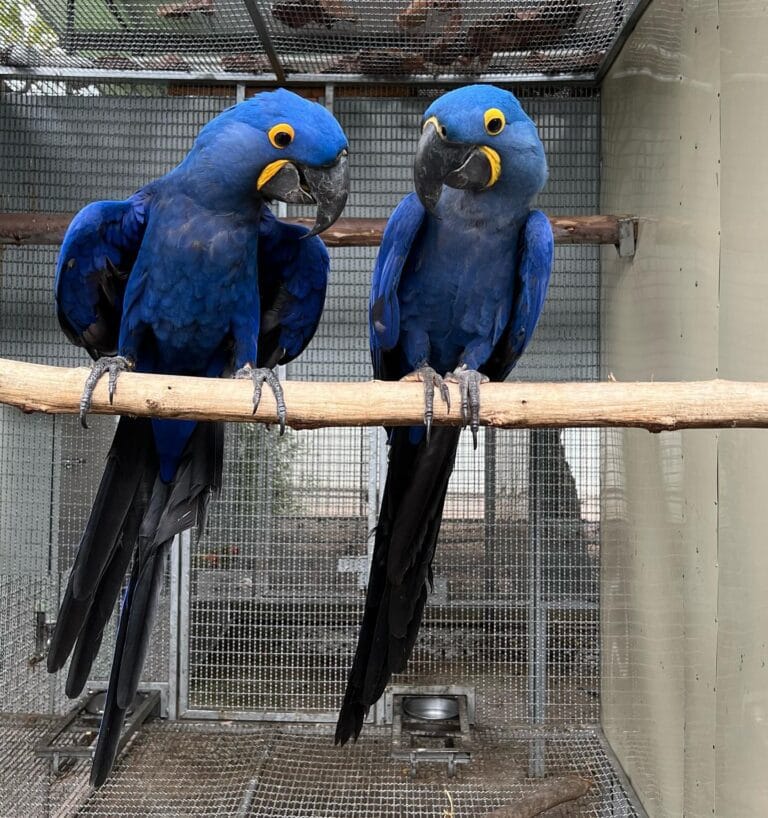 The Glaucous Macaw was not rare in its limited area, despite the fact that there was no evidence of sightings after 1830. There were specimens collected until the year 1860 (in Corrientes). The last living Glaucous Macaw, believed to originate from Brazil, was exhibited in the Buenos Aires Zoo back in 1936.
Reassessment suggests that this species is a generalist, and prefers the savanna habitat, which is interspersed with palm "islands", and bands of riparian forests along river systems. It was a specialised eater of palm fruits, specifically those of the chatay or yatay palm (Butia yatay) but it was also likely to consume ripe and unripe fruits, nuts, berries and vegetable matter. It nests on steep slopes or in cliffs, and also in tree cavities.
This bird was likely to be gregarious and social, just like other parrots. It could live for up to 14.8 years in captivity. It was believed to be a dependable breeder that reproduced year after year. In the wild, its life expectancy was likely to be between 50 and 80 years. This species was a potent disperser of seeds and could be a factor in the success of the palm yatay in its natural habitat.
Feeding
The Glaucous Macaw is one of the most stunning Parrots to buy. Its presence can have a strong influence on the surrounding. This large South American parrot is known for its bright blue feathers, bright yellow eyes, and the teardrop-shaped lipped on its lower beak.
Until recently very little was known about eating habits of the Glaucous Macaw. The earliest detailed references that I have located are two works by H.W. Bates' "The Naturalist on Amazons", first published in 1863, and describes his 11-year journey in Brazil. Later, in his book "As Birds of the Brazilian Forests", he wrote about the same experience. Both are about the Hyacinthine Macaw, Anodorhynchus Aureolarius. I have no reason to believe that they don't apply to this species.
It is likely that the Glaucous Macaw was a specialized for the consumption of palm nuts. It also took other seeds, fruits, and vegetable matter in smaller amounts. The diet of this species is likely to have been affected by the clearing of forests by early colonists to cultivate and cattle ranching, as well as the removal of the yatay palm (Butia yatay) from which it may have gotten a lot of its nutrition.
In the wild, it was common to find the Glaucous macaw in subtropical forests and savannahs where palm trees were present. It was found in tree cavities or on rocky banks and palm fronds. The female incubates and then lays two eggs per.
The young Glaucous Macaws rely on their parents for their care until they can fly and are fully fledged. Both females and males are extremely committed to their offspring and will constantly hunt for food and protect them from predators.
Unfortunately unfortunately, the Glaucous Macaw has been extirpated from most of its previous range. The disappearance of this magnificent bird is most likely due to the continued trapping of pets for the pet trade, as well as disturbance to habitat, specifically the massive clearing of yatay palms from which it could have gotten its main food supply. The Glaucous buy macaw parrot is classified as Critically Endangered.
Breeding
Glaucous Macaws form monogamous long-term pair. Both parents are involved in raising their young. They breed in the dry season when food availability is at its highest. Females lay an egg clutch that ranges from two to three eggs, which are incubated for around 28 days. Once the chicks hatch, they are fed by their parents through regurgitation for the first couple of weeks of life. Then the young macaws begin to explore their surroundings and learn how to eat themselves. They also learn how to fly and hunt for food.
Like all species of birds, glaucous macaws are social animals. They are active during daylight hours and rest at night. In the evening, they will often seek refuge inside tree cavities or other nesting areas that are suitable. They are highly vocal, and their calls can be heard throughout the forest during the day.
The species is expected to recover from the decline, but it is facing numerous threats, including habitat loss and illegal trapping of the bird for pet trade, and deforestation. It is believed that there are only about 20 glaucous macaws in the wild. The IUCN classifies the bird as "Critically Endangered--Possibly Extinct."
The glaucous macaw is also called the Lear's macaw, parrots To buy or the blue-throated hummingbird. It can be distinguished by its bright blue feathers. It is a large bird, measuring 70 centimeters in length, and has a strong beak that can break open hard nuts and seeds. This gorgeous bird is native to South America, and it can be found in many habitats such as grasslands, forests, dry lowland, and wetland.
This magnificent bird is a symbol of South American biodiversity. Its appearance is elegant with its slender body, bright blue feathers, and a light build. Its beak is curved and black, which aids it break open the seeds and nuts that make up a major portion of its diet. It's a beautiful bird, and it's often featured in bird shows. It is also a popular bird in captivity, where it could be kept for owning a macaw lifetime.
The glaucous Macaw can be described as one of the rarest birds in the world. It is Critically Endangered and could be extinct in the wild.
Various Aviculturalists have reported sightings of this bird, but the most recent was in 1992. This alleged sighting was in the southwest of Paraguay near the city Corrientes. The bird was male.
Origin
The Glaucous Macaw is a bird native to South America. It is endangered. This magnificent bird features a unique blue feather pattern and powerful beak that is capable of cracking open tough seeds and nuts. Glaucous macaws are known to form long-term monogamous families and both parents are involved in the raising of the chicks. They feed the chicks regurgitated food for the first couple of weeks after birth, and later they begin to eat solid food as they grow. Parents are also responsible for teaching the young macaws to fly and hunt.
The glaucous macaw is believed to be extinct in the wild, yet stories of this gorgeous bird's existence are still spreading across the globe. It is estimated that the glaucous Macaw was extinct in the 1800s because of the logging industry and cattle grazing in yatay palm (Butia yatay) areas, where the birds primarily gathered their meals. It is currently believed that the glaucous spix macaw for sale has made a comeback in captivity in the wild, where it is kept alongside its larger cousin Lear's macaw.
The glaucous Macaw is found in sub-tropical rainforests of South America. They are typically located in areas with a lot of palm trees, parrots To buy and are known to be highly adaptable to a variety of forested habitats. These beautiful birds are territorial and will defend the nesting and feeding area from intruders.In the past, there have been numerous reports about the glaucous hyacinth macaw cost however they are generally regarded as unreliable. The most recent claim of a wild event is a friend of Ridgely's that claimed to have observed four Glaucous macaws in Califomia. This claim is unacceptable until it is supported with evidence. Many experts have concluded that the bird is likely extinct because there are no records in the last century. However, they have always been willing to accept a small chance of its survival. If it does survive, it will be extremely uncommon to see large numbers.
Habitat
The Glaucous Macaw is a magnificent bird, renowned for its large size and turquoise-blue coloring. The long tail and wings highlight its graceful and agile moves. It is also a symbol of loyalty and love. Its beak, which is predominantly black, is distinctive in its shape that allows it to crack seeds and nuts. They are a significant part of its diet.
IUCN has classified the Glaucous Macaw as Critically Endangered. It states that there is only a small population of the bird and it is at risk of extinction. The species was previously relatively widespread, but it is found only in northern Argentina and southern Paraguay, north-eastern Uruguay and Brazil from Parana state southwards where it is nestled in cliffs on major rivers.
The Glaucous Macaw was not rare in its limited area, despite the fact that there was no evidence of sightings after 1830. There were specimens collected until the year 1860 (in Corrientes). The last living Glaucous Macaw, believed to originate from Brazil, was exhibited in the Buenos Aires Zoo back in 1936.Reassessment suggests that this species is a generalist, and prefers the savanna habitat, which is interspersed with palm "islands", and bands of riparian forests along river systems. It was a specialised eater of palm fruits, specifically those of the chatay or yatay palm (Butia yatay) but it was also likely to consume ripe and unripe fruits, nuts, berries and vegetable matter. It nests on steep slopes or in cliffs, and also in tree cavities.
This bird was likely to be gregarious and social, just like other parrots. It could live for up to 14.8 years in captivity. It was believed to be a dependable breeder that reproduced year after year. In the wild, its life expectancy was likely to be between 50 and 80 years. This species was a potent disperser of seeds and could be a factor in the success of the palm yatay in its natural habitat.
Feeding
The Glaucous Macaw is one of the most stunning Parrots to buy. Its presence can have a strong influence on the surrounding. This large South American parrot is known for its bright blue feathers, bright yellow eyes, and the teardrop-shaped lipped on its lower beak.
Until recently very little was known about eating habits of the Glaucous Macaw. The earliest detailed references that I have located are two works by H.W. Bates' "The Naturalist on Amazons", first published in 1863, and describes his 11-year journey in Brazil. Later, in his book "As Birds of the Brazilian Forests", he wrote about the same experience. Both are about the Hyacinthine Macaw, Anodorhynchus Aureolarius. I have no reason to believe that they don't apply to this species.
It is likely that the Glaucous Macaw was a specialized for the consumption of palm nuts. It also took other seeds, fruits, and vegetable matter in smaller amounts. The diet of this species is likely to have been affected by the clearing of forests by early colonists to cultivate and cattle ranching, as well as the removal of the yatay palm (Butia yatay) from which it may have gotten a lot of its nutrition.
In the wild, it was common to find the Glaucous macaw in subtropical forests and savannahs where palm trees were present. It was found in tree cavities or on rocky banks and palm fronds. The female incubates and then lays two eggs per.
The young Glaucous Macaws rely on their parents for their care until they can fly and are fully fledged. Both females and males are extremely committed to their offspring and will constantly hunt for food and protect them from predators.
Unfortunately unfortunately, the Glaucous Macaw has been extirpated from most of its previous range. The disappearance of this magnificent bird is most likely due to the continued trapping of pets for the pet trade, as well as disturbance to habitat, specifically the massive clearing of yatay palms from which it could have gotten its main food supply. The Glaucous buy macaw parrot is classified as Critically Endangered.
Breeding
Glaucous Macaws form monogamous long-term pair. Both parents are involved in raising their young. They breed in the dry season when food availability is at its highest. Females lay an egg clutch that ranges from two to three eggs, which are incubated for around 28 days. Once the chicks hatch, they are fed by their parents through regurgitation for the first couple of weeks of life. Then the young macaws begin to explore their surroundings and learn how to eat themselves. They also learn how to fly and hunt for food.
Like all species of birds, glaucous macaws are social animals. They are active during daylight hours and rest at night. In the evening, they will often seek refuge inside tree cavities or other nesting areas that are suitable. They are highly vocal, and their calls can be heard throughout the forest during the day.
The species is expected to recover from the decline, but it is facing numerous threats, including habitat loss and illegal trapping of the bird for pet trade, and deforestation. It is believed that there are only about 20 glaucous macaws in the wild. The IUCN classifies the bird as "Critically Endangered--Possibly Extinct."
The glaucous macaw is also called the Lear's macaw, parrots To buy or the blue-throated hummingbird. It can be distinguished by its bright blue feathers. It is a large bird, measuring 70 centimeters in length, and has a strong beak that can break open hard nuts and seeds. This gorgeous bird is native to South America, and it can be found in many habitats such as grasslands, forests, dry lowland, and wetland.
This magnificent bird is a symbol of South American biodiversity. Its appearance is elegant with its slender body, bright blue feathers, and a light build. Its beak is curved and black, which aids it break open the seeds and nuts that make up a major portion of its diet. It's a beautiful bird, and it's often featured in bird shows. It is also a popular bird in captivity, where it could be kept for owning a macaw lifetime.
- 이전글Nine Things That Your Parent Teach You About Kid Bunk Beds 25.03.02
- 다음글Can An Awesome Cure For Ovarian Cysts Really Relieve The Hurt? 25.03.02
댓글목록
등록된 댓글이 없습니다.

