10 Things You Learned In Kindergarden They'll Help You Understand Auto…
페이지 정보

본문
How an Automatic Vacuum Cleaner Can Save You Time and Money
Automatic vacuum cleaners can eat the majority of your list of chores. They can be a challenge to access spots like under beds and behind sofas where dust can build up.
Smart vacuums map their surroundings while cleaning, using advanced sensors. Side brushes and roller brushes agitate carpet fibers to collect dirt into suction mechanisms. Some even self-empty, avoiding messy bag changes between sessions.
Adaptive Cleaning
The majority of robot vacuums permit you to adjust cleaning functions based on the type of flooring and its condition. For instance, you can, set the vacuum to use a different suction level on different types of flooring. You can also prioritize areas that are full of dirt or debris like corners and stairs. Certain models can also switch between hard and carpet floors, and some offer a spot mode for more concentrated cleaning on the specific area or spill.
In addition to being able to adapt to different types of floors The best robot vacuums are smart enough to stay clear of obstacles that could interfere with a cleaning cycle. You can create an inventory of "no-go" zones and they'll use sensors to guide through furniture. Some models can also sense the fact that they've cleaned an area, which helps to avoid running over the same spots repeatedly.
You can control most robot vacuum cleaners by using an app on your smartphone, a remote app or smart speakers like Amazon Alexa or Google Assistant. Certain models can be programmed to clean in accordance with an established schedule, meaning you can have them work while you are away. If you'd rather not relying on a mobile device, opt for a model equipped with a camera that can create and display the map of a room.
Some models can even create a detailed cleaning history that allows you to look back on previous sessions, revealing to you what areas were addressed and how much time was spent on each one. These features can be especially useful in particular area that is particularly dirty and requires special attention.
Most basic robot vacuums are capable of vacuuming, and do not have mopping abilities. However, if you're looking for an appliance that is multi-functional and can handle both tasks, you can buy a model like the Eufy X10 Plus. This sleek robot cleaner vacuum can also mop and comes with an additional reservoir of clean water, so you don't need to worry about soiled pads or wands.
It makes use of a clever, swiveling motion to clean the floorboards and get rid of gunk like dried coffee stain. Its object-avoidance tech is trained as a self-driving vehicle, so it knows to stay clear of obstacles such as socks, cables and slippers. It can also create your floor plan to navigate tricky areas like staircases and corners.
Virtual Boundaries
When robot vacuums first started getting more popular initially, they relied on random patterns and simple sensors to navigate homes. They bounced around like pinballs, crashing into objects and wasting energy. The advent of mapping technology revolutionized this. It enabled them to digitally map a home and design efficient cleaning routes. It also increased efficiency and saved battery life.
 There are privacy issues when using a robotic vacuum cleaner, despite the advantages. One of the vacuum's GPS systems and navigation tools can trace a floor and reveal information about the owner's location and income. This can be used for marketing and advertising purposes, and it could even reveal a person's personal details if a hacker gains access to the information.
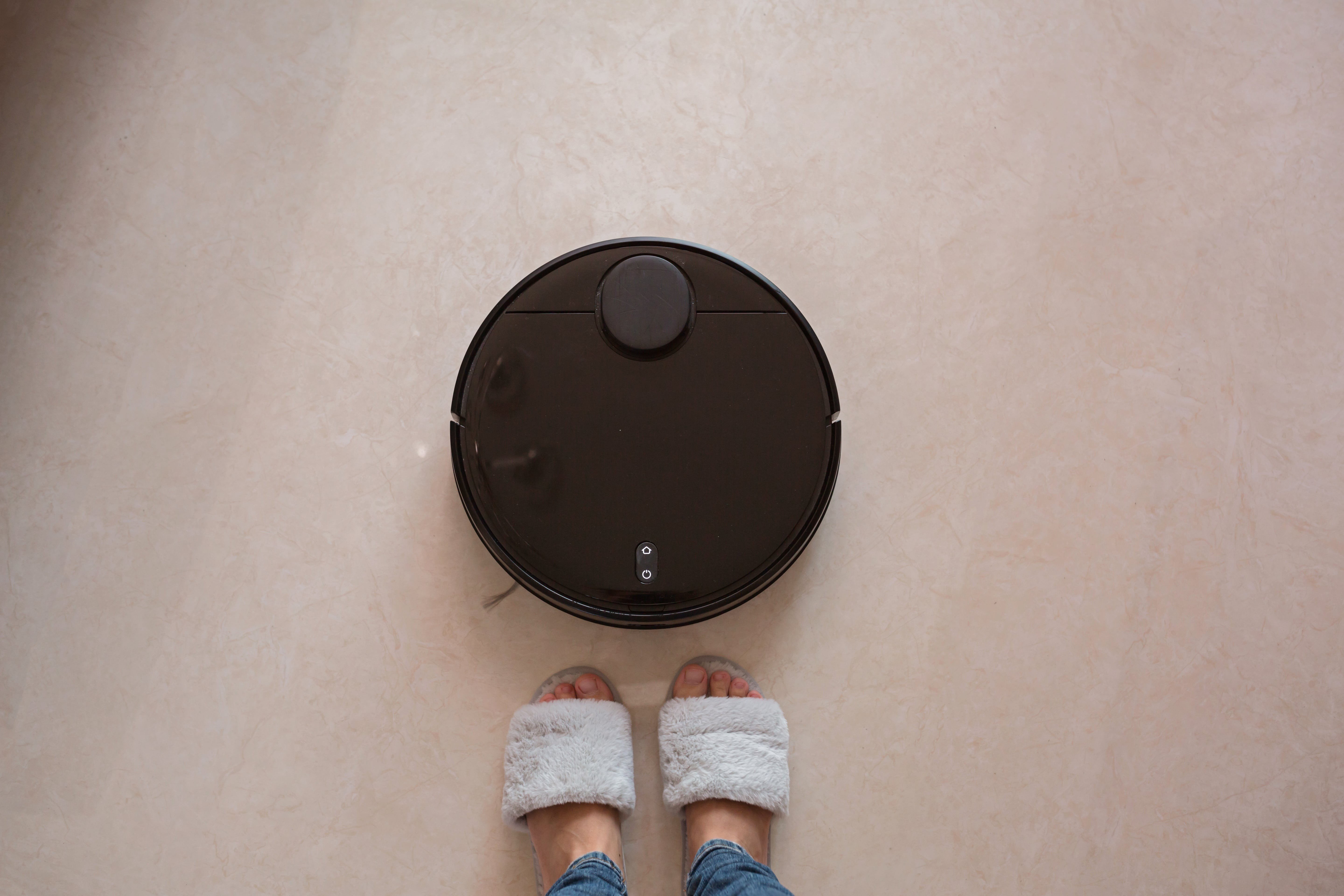 Set virtual boundaries that limit the use your robot vacuum's map. These prevent the robot from stepping into areas it shouldn't be, such as bedrooms when your children are asleep, or an office where you're conducting an online meeting. These boundaries can be set up by using a smartphone app. They are applied during the cleaning process.
Another option is to put up an actual barrier, however it could be unattractive or become a trip hazard. This type of barrier can also hinder the mapping process by blocking sensors and causing it to be difficult for the vacuum to detect the furniture.
The Dreame Smart Mapping System is an excellent alternative. It makes use of Lidar and 3D TOF imaging to make maps of your house and to identify furniture. The robot is then able to move through the furniture with a high degree of precision while avoiding contact and ensuring an efficient cleaning. It is essential to regularly update your mapping and ensure that the sensors are free of any debris to ensure the best automatic vacuum and mop performance. Make sure to clean and inspect the charging contacts to prevent corrosion and to ensure an effective connection between the docking station and the robot. This will help keep the robot moving smoothly and will ensure that it is able to return back to its base if it is required.
Auto-Emptying
When you purchase a robot vacuum cleaner with auto-emptying capabilities, you can enjoy hands-free cleaning without having empty the dust bin manually. This feature is especially useful for those who use robots frequently and have to empty them less often.
The majority of robotic vacuums have small dustbins that you need to empty out every couple of cleaning sessions. However, self-emptying models come with larger bases that are designed to automatically empty the dirt collected into their own docking stations. This means you don't have to clean the device's trash bin and brings the dream of an entirely automated household one step closer to becoming a reality.
Robots with this feature typically come with docking stations that can hold one week's worth of trash according to the maker. They can use a sealed transfer to dump their contents in the station, and keep running until it's time for an additional bin.
These stations not only simplify the process of emptying a robot, they also help reduce your exposure to harmful allergens. During the transfer, sophisticated filtration ensures that toxins do not make it back to your home and are disposed of in the device’s internal dustbin. These ports are suitable for people suffering from allergies due to their huge capacity, which reduces the frequency of opening and closing the dustbin.
In addition to the automatic disposal of debris into their bases, many of these products have built-in sensors which notify you when they're about to be empty. Some models have an easy switch to turn on and off, while others give more detailed information like an icon or status. This is an excellent way to stay aware of the health of your machine and to keep it running at maximum performance.
Although robot vacuum cleaners with this feature typically cost less than their non-auto-emptying counterparts they will save you time and effort in the long in the long. Black Friday sales may allow you to get an item that has this feature at a lower price than other times of the year.
Self-Navigation
Designed for hands-free operation, robot vacuum cleaners use motors and sensors to facilitate floor cleaning with minimal user input. These disk-shaped machines move throughout the house, map rooms and spaces and create virtual barriers to prevent furniture and other objects and return to docking stations when the battery runs out or the task is completed.
In recent years robotic hoovers vacuums have developed dramatically. Today's top performers can pick up fine particles, like baking soda and sand, as well as heavy debris, such as nuts and screws made of steel. They can also handle pet hair and other soft messes.
Some models even have a mopping function that uses an elongated pad or cloth to apply consistent pressure and wash tough stains. Advanced mapping systems, such as ECOVACS' TrueMapping 2.0 and AIVI 3D technology, help robots to avoid obstacles in real-time and navigate efficiently.
While a robovac isn't able to take on the stairs or clean dirt from the ground as well as manual vacuums, modern models can be effective in maneuvering around corners and narrow spaces. They employ sensors and cameras to produce digital maps of rooms, detect objects and walls, and plan efficient cleaning routes. They can also make use of an algorithm for object recognition to recognize a variety of household items, and learn from previous mistakes to improve navigation in the future.
Many robotic vacuums come with a built-in rechargeable battery for long-lasting operation. Some models have Wi-Fi connectivity so they can connect to the wireless network in your home and receive updates to software automatically. Some are compatible with voice assistants which allow you to control them using your smartphone or another smart device.
Robots require minimal maintenance other than emptying the bin regularly. To ensure maximum performance it is necessary to wash the brushes of hairs that have tangled and wipe the cameras or sensors regularly. It is also important that your robot is set on a schedule and empty the dustbin before each use to optimize performance.
Automatic vacuum cleaners can eat the majority of your list of chores. They can be a challenge to access spots like under beds and behind sofas where dust can build up.
Smart vacuums map their surroundings while cleaning, using advanced sensors. Side brushes and roller brushes agitate carpet fibers to collect dirt into suction mechanisms. Some even self-empty, avoiding messy bag changes between sessions.
Adaptive Cleaning
The majority of robot vacuums permit you to adjust cleaning functions based on the type of flooring and its condition. For instance, you can, set the vacuum to use a different suction level on different types of flooring. You can also prioritize areas that are full of dirt or debris like corners and stairs. Certain models can also switch between hard and carpet floors, and some offer a spot mode for more concentrated cleaning on the specific area or spill.
In addition to being able to adapt to different types of floors The best robot vacuums are smart enough to stay clear of obstacles that could interfere with a cleaning cycle. You can create an inventory of "no-go" zones and they'll use sensors to guide through furniture. Some models can also sense the fact that they've cleaned an area, which helps to avoid running over the same spots repeatedly.
You can control most robot vacuum cleaners by using an app on your smartphone, a remote app or smart speakers like Amazon Alexa or Google Assistant. Certain models can be programmed to clean in accordance with an established schedule, meaning you can have them work while you are away. If you'd rather not relying on a mobile device, opt for a model equipped with a camera that can create and display the map of a room.
Some models can even create a detailed cleaning history that allows you to look back on previous sessions, revealing to you what areas were addressed and how much time was spent on each one. These features can be especially useful in particular area that is particularly dirty and requires special attention.
Most basic robot vacuums are capable of vacuuming, and do not have mopping abilities. However, if you're looking for an appliance that is multi-functional and can handle both tasks, you can buy a model like the Eufy X10 Plus. This sleek robot cleaner vacuum can also mop and comes with an additional reservoir of clean water, so you don't need to worry about soiled pads or wands.
It makes use of a clever, swiveling motion to clean the floorboards and get rid of gunk like dried coffee stain. Its object-avoidance tech is trained as a self-driving vehicle, so it knows to stay clear of obstacles such as socks, cables and slippers. It can also create your floor plan to navigate tricky areas like staircases and corners.
Virtual Boundaries
When robot vacuums first started getting more popular initially, they relied on random patterns and simple sensors to navigate homes. They bounced around like pinballs, crashing into objects and wasting energy. The advent of mapping technology revolutionized this. It enabled them to digitally map a home and design efficient cleaning routes. It also increased efficiency and saved battery life.
There are privacy issues when using a robotic vacuum cleaner, despite the advantages. One of the vacuum's GPS systems and navigation tools can trace a floor and reveal information about the owner's location and income. This can be used for marketing and advertising purposes, and it could even reveal a person's personal details if a hacker gains access to the information.Set virtual boundaries that limit the use your robot vacuum's map. These prevent the robot from stepping into areas it shouldn't be, such as bedrooms when your children are asleep, or an office where you're conducting an online meeting. These boundaries can be set up by using a smartphone app. They are applied during the cleaning process.Another option is to put up an actual barrier, however it could be unattractive or become a trip hazard. This type of barrier can also hinder the mapping process by blocking sensors and causing it to be difficult for the vacuum to detect the furniture.
The Dreame Smart Mapping System is an excellent alternative. It makes use of Lidar and 3D TOF imaging to make maps of your house and to identify furniture. The robot is then able to move through the furniture with a high degree of precision while avoiding contact and ensuring an efficient cleaning. It is essential to regularly update your mapping and ensure that the sensors are free of any debris to ensure the best automatic vacuum and mop performance. Make sure to clean and inspect the charging contacts to prevent corrosion and to ensure an effective connection between the docking station and the robot. This will help keep the robot moving smoothly and will ensure that it is able to return back to its base if it is required.
Auto-Emptying
When you purchase a robot vacuum cleaner with auto-emptying capabilities, you can enjoy hands-free cleaning without having empty the dust bin manually. This feature is especially useful for those who use robots frequently and have to empty them less often.
The majority of robotic vacuums have small dustbins that you need to empty out every couple of cleaning sessions. However, self-emptying models come with larger bases that are designed to automatically empty the dirt collected into their own docking stations. This means you don't have to clean the device's trash bin and brings the dream of an entirely automated household one step closer to becoming a reality.
Robots with this feature typically come with docking stations that can hold one week's worth of trash according to the maker. They can use a sealed transfer to dump their contents in the station, and keep running until it's time for an additional bin.
These stations not only simplify the process of emptying a robot, they also help reduce your exposure to harmful allergens. During the transfer, sophisticated filtration ensures that toxins do not make it back to your home and are disposed of in the device’s internal dustbin. These ports are suitable for people suffering from allergies due to their huge capacity, which reduces the frequency of opening and closing the dustbin.
In addition to the automatic disposal of debris into their bases, many of these products have built-in sensors which notify you when they're about to be empty. Some models have an easy switch to turn on and off, while others give more detailed information like an icon or status. This is an excellent way to stay aware of the health of your machine and to keep it running at maximum performance.
Although robot vacuum cleaners with this feature typically cost less than their non-auto-emptying counterparts they will save you time and effort in the long in the long. Black Friday sales may allow you to get an item that has this feature at a lower price than other times of the year.
Self-Navigation
Designed for hands-free operation, robot vacuum cleaners use motors and sensors to facilitate floor cleaning with minimal user input. These disk-shaped machines move throughout the house, map rooms and spaces and create virtual barriers to prevent furniture and other objects and return to docking stations when the battery runs out or the task is completed.
In recent years robotic hoovers vacuums have developed dramatically. Today's top performers can pick up fine particles, like baking soda and sand, as well as heavy debris, such as nuts and screws made of steel. They can also handle pet hair and other soft messes.
Some models even have a mopping function that uses an elongated pad or cloth to apply consistent pressure and wash tough stains. Advanced mapping systems, such as ECOVACS' TrueMapping 2.0 and AIVI 3D technology, help robots to avoid obstacles in real-time and navigate efficiently.
While a robovac isn't able to take on the stairs or clean dirt from the ground as well as manual vacuums, modern models can be effective in maneuvering around corners and narrow spaces. They employ sensors and cameras to produce digital maps of rooms, detect objects and walls, and plan efficient cleaning routes. They can also make use of an algorithm for object recognition to recognize a variety of household items, and learn from previous mistakes to improve navigation in the future.
Many robotic vacuums come with a built-in rechargeable battery for long-lasting operation. Some models have Wi-Fi connectivity so they can connect to the wireless network in your home and receive updates to software automatically. Some are compatible with voice assistants which allow you to control them using your smartphone or another smart device.
Robots require minimal maintenance other than emptying the bin regularly. To ensure maximum performance it is necessary to wash the brushes of hairs that have tangled and wipe the cameras or sensors regularly. It is also important that your robot is set on a schedule and empty the dustbin before each use to optimize performance.
- 이전글공간의 신비: 우주와 별들의 미래 25.01.24
- 다음글What To Expect From Chat Gpt Free? 25.01.24
댓글목록
등록된 댓글이 없습니다.

